Thursday, February 9, 2012
Adventure as an Excuse for Beercation.
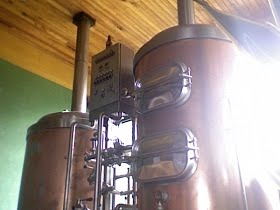
Sly folk looking to work crafty beer into their honeymoons or adventure travel would do well to mark it down. Two of the most popular destinations in Costa Rica are Volcán Arenal -- a proper, active cone rather than a big smoky hole in the ground -- and the laid-back beaches of Guanacaste, on the Pacific Coast. The smart way to get from one to the other is to rent a car and drive the northern route around Lake Arenal. Conveniently, that takes a thirsty gentleperson right by Volcano Brewing and the newly re-badged Lakeview Hotel.
No long ago it was called the Hotel Tilawa. We stayed there once, to meet the owner, J.P. Cazedessus, who was trying to get the brewpub started. The place was rough-and-ready; "in need of some TLC," was how we put it. In the off-season it felt like a private hostel. Now the hotel is under new management and a new name, while Cazedessus focuses on the brewery and eco-friendly housing projects. It remains a windsurfing destination, and there are options for hiking, fishing, boating, riding horses, whatever. Most importantly for our purposes, the beer is flowing.
Meanwhile: The flagship is called Witch's Rock, an American-style pale ale, and there are seasonals from time to time. The beer's name comes from a dramatic chunk of Planet Earth that juts out of the Pacific Ocean and enjoys a reputation for excellent surfing. Volcano Brewing is now connected to Witch's Rock Surf Camp in Tamarindo, where the pale ale ought to be on tap at Joe's place. So that could be your Guanacaste destination, if you're in need of one.
We stayed in Tamarindo not too long ago, and it was nothing if not versatile. You can get your high from wining, dining and massages, from surfing and sunsets, or from that friendly dude out on the sidewalk selling weed. Mix and match according to interest. Now, I reckon, we can add crafty beer to the list.
Tuesday, February 7, 2012
Brussels Grand Place to Welcome Hard Rock Café, Then Jump a Shark.
I was working on a long post breaking down this recent Bloomberg piece, which declares that "Brussels is for foodies." Which is true. It recommends 10 nice-looking and mostly expensive places to eat. I was going to show how few of them really give a damn about beer, which ought to be shameful in Belgium's capital. But there is no news in that.
Then I came across something really and truly shameful, and it put the other stuff into perspective. The news is that there will be a Hard Rock Café in Brussels -- and not just in Brussels, but on the Grand Place.
I checked the date. April Fools? No. But is it really a done deal? It would appear so.
We should not be surprised. The Grand Place -- one of Europe's most impressive city squares -- has been bogged down with tourist traps for years. They have indifferent service and overpriced, mediocre food. They hang old beer signs and give a superficial nod to the country's brewing tradition, and then stock nothing interesting beyond a couple of Trappists. Fine. At least they look the part. They are still brasseries and uniquely Belgian, even if we knew better places with better prices a few blocks away.
But the Hard Rock? Really? Has Brussels lost its mind? And now those of us --locals and foreigners alike -- who have labored to tell Brussels that it ought to have dignity, that it deserves some, are left to ask ourselves: Did it ever have a chance? Have we been wasting our time?
"In addition to its food, Hard Rock offers unmatched specialty drinks from its award-winning bar menu, from Hurricanes and Margaritas, to its Alternative Rock non-alcoholic beverage menu featuring favorites like Wildberry Smoothies and Crushed Velvet 'martinis.'" Oh my.
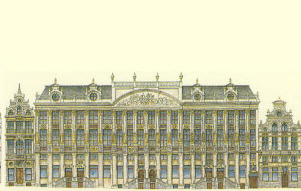
The address is Grand Place 12a, up in the southern corner. This building is also known as the Roi de Baviére (the "King of Bavaria"). Note that this is not the same building as Grand Place 12, which is two doors up from the Brewers House in the building known as the Maison du Mont Thabor. Number 12a is just across the mouth of Rue des Chapeliers, adjoining the Dukes of Brabant, next to 't Kelderke. You can see a map with addresses here. In the picture above, 12a is the lower building on the far right.
A nice place for some Hard Rock neon, right?
The Grand Place is a UNESCO World Heritage Site, and there are local protections that apply. The Hard Rock might have to leave the facade relatively intact, and may face restrictions on the aforementioned neon. According to news reports, a private investor owned the house and negotiated an 18-year lease with Hard Rock. If the company follows the same rules as everyone else on the Grand Place, it's hard to imagine how the authorities could or even should discriminate based on a history of tackiness. But you never know. The locals love a good protest, and maybe this will stir them up.
I'm sure there must be a class of tourist that would be happy about this, otherwise it would not be possible. Just don't blame the Americans: It's been 20 years since I met a fellow American who was excited about seeing a Hard Rock Café. And that person, I believe, had only recently hit puberty.
Meanwhile, Brussels says it plans to turn the Bourse into a national beer museum by 2014. I'd expect heavy support from A-B InBev, and all that such support would entail. The article says, "Unlike the Netherlands with their Heineken Experience, Belgium only has a number of small beer museums." As if that were a bad thing.
About the museum: The Flemish politician says something that says too much about much Flemish political thinking: "The fact that we have a special glass for every beer, with artisanal breweries tucked away all over the place is extremely charming for our Dutch visitors. Beer is a science in which we excel, and it could be perfectly showcased in a museum like this one. We feel the stock exchange is a prime location, even though 65% of all Belgian beer is brewed in Flanders."
See how he worked that last bit in? Absurd. Nevermind that Wallonia has only one-third of the country's population. But him singling out the Dutch tourist is interesting. Will the Dutch tourists who find the special beer glasses and little breweries "charming" think the same thing about a Jupiler museum?
And what will they think of the Hard Rock?
Finally, I have to note that Hard Rock's European operations VP, Calum MacPherson, said that the company hopes to make it an "essential gastronomic destination" in Brussels.
And there, ladies and gentlemen, is your perspective.
Thursday, February 2, 2012
Costa Rica Gets First Craft Brewers Association.
We're getting way past the point where I need to say, "Hey, look, there is a craft beer culture starting to develop in Costa Rica!" It's the fact of the matter. Witness the development of civil society at its thirstiest.
More interesting now is where this nascent local beer culture goes from here. There is an announcement related to that, but first the news...
The Asociación de Cerveceros Artesanales de Costa Rica -- Costa Rica's Association of Craft Brewers -- is a reality in name, if not quite legally. Fourteen brewers, pro and amateur, met on Sunday to form the group at the Bodega de Chema. This meeting laid the groundwork for formal registration with the government. (Remember, this is a very bureaucratic country and there's a certain way to do things, and that way usually involves paying lawyers.)
The group's goals: (1) to promote the culture and growth of craft beer; (2) to promote the responsible enjoyment of that beer; (3) to support the country's craft beer businesses; (4) to provide services for members, such as improving the brewers' technical know-how; and (5) to promote friendship, solidarity and social responsibility among its members.
It's not cheap to get a lawyer and register an association, so the group has to raise some money. That's where the announcement comes in.
Plans are in the works for Costa Rica's first festival de cerveza artesanal... April is looking likely at the moment. Got to keep things vague until things are finalized, but there will be more details soon. Costa Rica's Craft Brewing, generously, is taking the lead in organizing the event. Proceeds will go to the association. Stay tuned.
So, a craft brewers' assoiation and a craft beer festival. Can it be long before there's a Costa Rica Craft Beer Week? Maybe we should just go ahead and declare it now. Plan your surfing tours and eco-vacations around it.
Monday, January 30, 2012
More Ruminations on Midwestern Style, Such As It Is.
I went to the 25th annual Great Taste of the Midwest last August searching for "somewhereness" in the beers there. I'm a Midwesterner myself, originally, and I wanted to know if there was anything that sets the region's beers and brewers apart from the rest of the world.
Part of that search resulted in an article in the latest All About Beer magazine, including some fun stuff from New Glarus co-owner and brewmaster Dan Carey. The article's not on the website so look for it wherever the finest magazines are sold. Or subscribe here.
Like most kids growing up, I didn't think my hometown or even my region had any culture to speak of. But, as often happens, I moved away and looked back. Then I saw it pretty clearly.
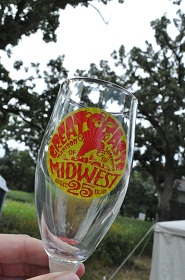
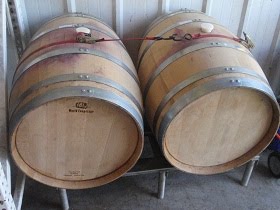
Tom Griffin is another Midwesterner with perspective. He lives in Madison and is a longtime member of the Madison Homebrewers and Tasters Guild, which organizes the Great Taste. But he's originally from Florida and recently has become known as the “Barrel Guy” (more on that story here). Griffin has traveled tens of thousands of miles selling used whiskey barrels to brewers, facilitating the barrel-aging phenomenon almost single-handedly. If you've tasted a barrel-aged beer from any brewery around the country, there's a pretty good chance that Griffin sold them the barrel.
For his part, Griffin says the secret to Midwestern beers may lie in the friendly, open communication among brewers. He said he's seen plenty of that same cooperative spirit on the West Coast—and noted that many of those brewers, including Firestone Walker's Matt Brynildson, are originally from the Midwest. And what about Fritz Maytag, often thanked for fathering modern craft beer when he revived Anchor in San Francisco? Yep. He's from Iowa.
“Our culture here has become beautiful,” Griffin said, “and it is infused by the way that people talk to each other.” As far as the beers, he said, “we're very much into balance. ... That sense of balance, between the malt and the hops, we have that here.” Even the hoppier Midwestern beers tend to be “more approachable, less abrasive on the tongue,” Griffin said. “Why does beer have to be challenging? It should have grace and balance.”
What story do the beers tell? To be fair, not all of what I tasted that fine Saturday at the Great Taste could described as "balanced." However, trying to go for a mix of the weird and not-so-weird, I found that the most impressive beers were indeed on the “everyday” end of the spectrum. I tasted several excellent, flavorful lagers loaded with grainy, hoppy, country character. I tasted a series of session-strength pale ales with big hop aromas but nonetheless subdued bitterness—a bitterness that nods and says “howdy” but doesn't caulk your tongue with resin.
One of my favorite examples that day: a crisp, aromatic pale ale from Dave's Brewfarm that weighed in at 3.7% alcohol. Its name: Imperial Double. So maybe there's also something to be said, as well, for the Midwestern sense of humor.
“Brewers are just lazy,” said Dave Anderson, brewer and owner of the wind-powered farmhouse brewery in Wilson, Wisc. At the Great Taste he wore a wide-brimmed straw hat and a name tag that said, “Farmer Dave.”
“It's imperial this, double that. I mean, really?”
A few days before the Great Taste, some words on the Madison Beer Review website caught my attention. Site editor Jeffrey Glazer said that “the Midwest is often dismissed as the 'red-headed stepchild' of the beer industry—good, occasionally great, but often boring.”
The dirty little secret, he said, “is that our 'boring' beer is far better, on average, than the 'boring' beer made by every brewery in the known universe.”
So I hunted Glazer down at the Great Taste and got some more out of him.
"While it might be great to have a sour beer, an IPA, whatever, we're really looking for something we can buy a 12-pack of, or the case that we can keep in the garage," he said. "We throw that in the garage, and that's what we drink.
"What we're really looking for something that we can drink every single day, because that's when we're doing to drink it."
So is there anything to this? Does Midwestern beer find its sense of style in the balanced, in the drinkable? There is plenty of anecdotal evidence, for whatever that's worth. As I mentioned in the article, the region's top craft sellers include beers like Boulevard Unfiltered Wheat, Goose Island Honker's Ale and New Glarus Spotted Cow.
Another anecdotal example, off the top of my head: Steve Crider of 2nd Shift in New Haven, Mo., is a wizard with hops and his IPAs are among the best I've smelled and tasted. But his smooth Hibiscus Wit is the one that sells like mad.
On the other hand: More than anywhere else, the West Coast has carved out a beer identity with its hop-forward IPAs—which many people I spoke to described as "unbalanced." Comparisons are inevitable; quite possibly, easterners and southerners would describe their own beers as "balanced" and "drinkable" in comparison.
In thinking about the beers I tasted that day, I can remember a few that I thought had some "sense of place" without even checking my notes. There was the Moon Man No-Coast Pale Ale from New Glarus, for its balance and its name. (On the other hand, it is difficult to avoid thoughts of terroir with the brewery that advises us to "drink indigenous.") The Founders All-Day IPA hit a similar sweet spot. There was the Hopfenstange Pils from Delafield Brewhaus, one of many grainy and well-hopped lagers at the festival. Lots of potential in that vein.
Painting with broad strokes: Clean beers, pale, in which the bitterness is restrained so that one can taste the grains, but with the hops often making a comeback in the flavor and aroma. They are, in short, the sorts of beers that I especially like to drink. Which proves absolutely nothing, except that I'm looking forward to more field testing when I go home this summer, and every time I go home.
Friday, January 27, 2012
Just a Year Old, More Props for Urban Chestnut.
Yesterday was the first birthday of Urban Chestnut in St. Louis. I drank a half-dozen or so of their beers last summer, a couple of them repeatedly. What I now tell people who say they're visiting St. Louis: Go to Urban Chestnut and drink the Zwickel.
Coincidentally, we must assume, yesterday was also the day that Ratebeer announced its annual Best awards, based on individual scores by, effectively, thousands of active raters around the world. Say what you will about their biases, but these are folks who have tasted a lot of beers from a lot of places. We can criticize the herd and its findings -- and they make a nice big target, don't they? -- but these awards are nothing if not democratic and educational.
No. 5 on the list of top new breweries in the world: Urban Chestnut. And easily making the Top 50 Best Brewpubs in the world: Urban Chestnut.
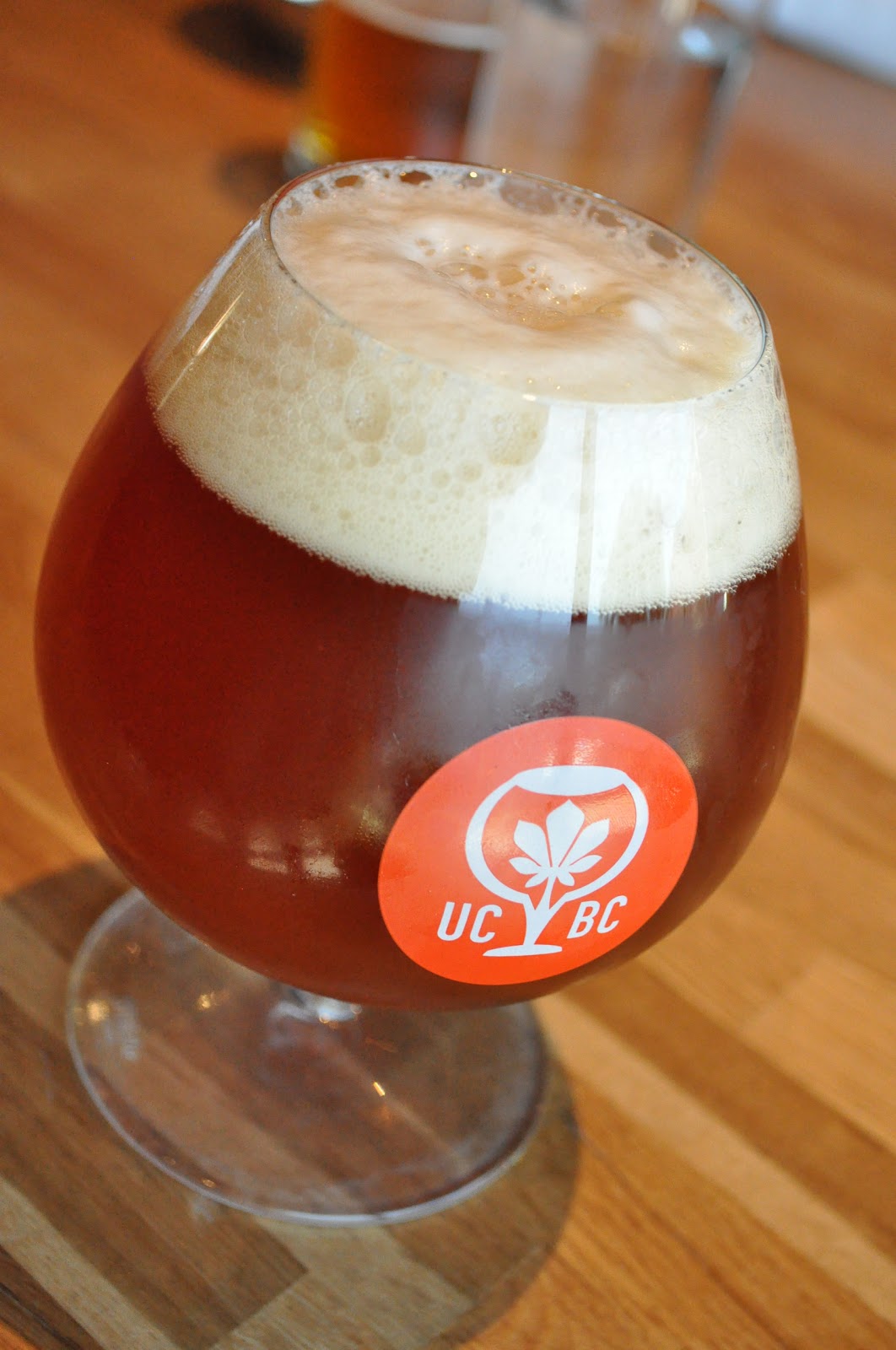
This says good things about the brewery, obviously, but also about Ratebeer. Urban Chestnut is succeeding there without the beers that stereotypically succeed there: no barrel-aged imperial stouts, yet, made from coffee passed through the intestines of Indonesian weasels (although who knows what the future holds?). Its top-rated beer is Hopfen, a heavy-on-the-Hallertauer "Bavarian IPA" that weighs in around 6% strength. The Winged Nut chestnut ale (pictured) gets high marks, but so does the hoppy Half Crown session ale (4%).
More stuff from the area: I wrote the bit in the latest Draft magazine about how St. Louis is one of the spots "Where to Drink Next." It'll likely show up on the website one of these days soon, but really shouldn't you go and subscribe? Also mentioned, besides Urban Chestnut (and I would've liked to include more): Iron Barley, Civil Life, Schlafly, the Bridge and 4 Hands. I had nothing to do with this, but across from the article is a full-page Urban Chestnut ad that says, "We're proud to be part of the St. Louis craft brewing community."
For more on that community, see my post on The Spirit of St. Louis and my article in the New York Times. Not bad for a couple of weeks "work" last summer.
Finally, a pleasant surprise: Beer Advocate has an article in its latest issue about Augusta Brewing, about 40 minutes drive southwest of St. Louis. I might have mentioned before, I pay taxes and vote in Franklin County, where Augusta is setting up its new brewhouse in the old Droege's grocery store. The store was there in Washington, Mo., since 1896, having moved from a nearby spot in 1867. I shopped there a few times, with my wife and her family. Looking forward to drinking there too.
Friday, January 20, 2012
Wine Has Parkerization. Does Beer Have Tickerization?
For starters, it's not an apples-to-apples comparison. Were talking about a phenomenon that has allegedly taken over all or virtually all wine's largest producers, compared to a niche within the craft beer niche.
But there are similarities. And the way that craft beer is booming these days... Well, it's always fair to wonder what awaits us down the road.
Wine: Shops and shoppers pay attention to the ratings of critics. Bigger, more obvious, fruitier, sweeter, stronger wines tend to get better ratings (for which Robert Parker often gets all the blame, which is both unfair and a compliment to his influence), which leads to bigger sales. And winemakers naturally want to both (a) make money and (b) give the people want they (think they) want... mutually beneficial goals. Meanwhile, a high rating sends a bottle's price skyward in the speculative market. New international markets are now hip to those ratings, sending prices even higher, creating further incentive to help homogenize the wine world. Sip, swirl, spit, rinse and repeat.
The obvious downside of this cycle: lack of diversity. It can be difficult to near-impossible for a casual wine buyer (like me) to know where to find something different -- which often means subtle, acidic, lighter. Vinho verde I know, but beyond that we are often outside the shopkeeper's comfort zone.
Beer: It has no Robert Parker, nor do beer critics/writers in general have anywhere near the sort of influence over shoppers that wine writers do. The popular theory is that beer is more "democratic" and less likely to inspire fear in the buyer... The difference in price has a lot to do with it, but so does culture. Few bring a pricey bottle of beer to a party in fear that their friends will turn their noses up at it. After all, whatever it cost, it's only beer. Right?
Speaking of democratic: Craft beer drinkers, especially those just waking up to its surprising diversity in flavor, often pay attention to rankings on the big rating sites, Ratebeer and BeerAdvocate -- where they promptly find a surprising lack of diversity. For the same reasons that I reckon obvious wine score well -- it's easy to identify big flavors, even in small amounts -- there are an absurd number of barrel-aged imperial stouts on those lists. There are other flavor bombs too, like sour ales and double IPAs. But huge, strong blackness tends to do the best. It's easy to appreciate the flavors. It's easy to appreciate the color.
There's nothing wrong with that, it must be said. I spent about two hours sipping 11 ounces of imperial stout last night, once the tots were in bed, and it was a joy. I like a big bulbous glass of cabernet with my broiled ribeye.
The problem is not bigness. It's diversity. Can you find a lighter, more acidic option on the restaurant wine list? Is your local micro throwing money and time into a barrel program -- and it seems like all of them are these days -- at the expense of other, more original options? I'm on record gnashing my teeth at the relative lack of moderate and low alcohol beers in brewpubs and taphouses these days, and I've read plenty of similar rants among cognoscenti.
Bonus hypothetical: If a micro is barrel-aging an imperial stout only to satisfy a subset of customers who will pay a premium for it, when the brewer himself would rather not drink the stuff, is it still "craft"?
I would suggest that it is not. Not if we want that word to mean something.
'
Hip-hop head nods to Stan H., Alan M. and Matt Mothafuckin' Kramer.
Monday, January 9, 2012
A Fighting Stance and Higher Motives.
I was hunting for something totally unrelated when I stumbled on this:
There will thus be present brewers producing beers, the majority of which, if not all, have well-defined characteristics. The aim is to support and defend those who have made the decision to turn their back on easy commercial gain but rather have adopted a fighting stance against beers with little flavour. They are thus brewers who wander off the well-trodden path. They work in breweries on a human, rather than an industrial scale, using traditional and natural methods, and are guided by higher motives than an unbridled pursuit of profit. They are small in size, but their contribution to our brewing heritage is enormous: they are the ultimate guarantors of the preservation of centuries old tradition and produce beers with a genuine diversity of flavours.All the emphasis is mine. Those words are from the 2007 program for the Bruxellensis festival, explaining how the organizers chose which brewers to invite. I submit it as yet another exhibit in the ongoing conversation about just what exactly constitutes "craft." Yes, we get tired of that conversation at times, but it will continue with or without us. So let's keep it on point.
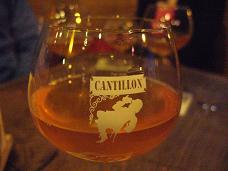
A few weeks ago, I asked Jean Van Roy of Cantillon what "craft" or "artisanal" means to him. To paraphrase, because I didn't scribble that particular quote and I don't have the time to go through my recordings just now, he said it means putting the product over the profit.
It's not a useful definition for tax authorities or industry groups that must decide whom to include and exclude. Luckily, I am neither of those things.
Wednesday, January 4, 2012
More, Please: Cas Beer is Out.
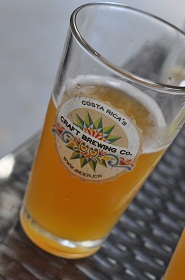
Dropped by that craft brewery in Cartago on Monday and learned something useful: Its third and latest seasonal beer is available this week. In this case it's a session-strength wheat beer made with what is arguably Costa Rica's signature fruit: cas.
If I told you the Latin word for cas is Psidium friedrichsthalium, would that help? No. Much better to explain that it's a sour member of the guava family with lime-like leanings. Its most popular use is in the sweetened, fresh fruit drinks enjoyed at roadside sodas (incidentally, it also makes a killer sorbet). It's got a tangy, tart and earthy taste and smell. That shows up in the beer's aroma just enough for me to think, "Oh yeah, that's cas." The tartness is restrained and the beer is highly drinkable at 4.5% abv.
Just between us, I intend to put a serious personal dent in this beer's availability. It won't last long. It's a crowd pleaser with distinct local identity.
If you're keeping track, this is the third seasonal from Costa Rica's Craft Brewing Co. Like the others, this seasonal should be available at the brewery's 16 or so draft accounts (a number that is soon to grow, thanks to increased brewhouse capacity). One of those draft accounts I've failed to mention is the Hostel Galileo in San José, which I gather is a fun place that sells a hell of a lot of beer. Could be just the thing for thirsty travelers looking to overnight in the capital before or after a flight.
Happy new year, y'all.
CORRECTED to offer Latin name for Cas instead of English word "soursop," which is in fact guanabana. And which also makes a nice sorbet flavor, by the way.
Thursday, December 29, 2011
A Midwinter's Night in Brussels.
My first night back in Brussels, and there are 11 Saison Duponts lined up on the bar at Nüetnigenough. They are not all for me. I have 10 companions there to help. It starts with meeting a few old friends for a beer. It snowballs.
Randomly, Dan Shelton (he of Shelton Brothers importers) and Chris DeBenedetti (he of the Great American Ale Trail) are there when we walk in. I am having enough jet-lagged fun that I completely fail to see them. They think I'm leading an organized beer tour of some kind. No, nothing so profitable. Just researching for articles, some sold and some imagined. I'm foggy on the details, but I think Chris is working on an article or two and Dan is helping to show him around. The chat is too brief, as I'm "leading a tour" and they're trying to call it a night.
Somehow gathering a crack squad of 10 old drinking buddies, and then running into those two guys? The world is just smaller in some places.
As for our crew, we aren't quite ready to quit. A night-ending visit to Moeder Lambic Fontainas is in order. Come to think of it, that's also where we started, just a few blocks away. I decide that if I ever live in Brussels again, it would be unwise to live in that neighborhood--an expensive choice, and not because of the rent.
But before we leave Nüetnigenough, there are 11 Redor Pilses lined up on the bar...
Thursday, December 15, 2011
Talking Beer with Pierre at Delices et Caprices.
On Monday afternoon we shared my favorite beer of the week so far, the L'Enfant Terrible from Dochter van de Korenaar. It's an oak-aged lambic blend of some kind, although haven't had time to hunt down many details. Tart, sparkling, dry, with grapefruit notes and cobwebs. About 7 percent strength, but you won't know it until you stand up and try to walk away. Excellent beer and I wish there were more like it. Why aren't there?
A common theme on my travels this time: Everyone's seen a spike in interest in specialty beers, from visitors from all corners of the globe, in just the last couple of years. Chinese tourists, to name an example, know about Mikkeller and they are asking for it, among others. "The consumer has totally opened up his mind about beer," Zuber said.
But is he asking after the right beers? Sometimes they seem to be more interested in the international- or U.S.-style craft beers -- IPAs and imperial stouts, and so on -- than the traditional ones. "When the IPAs came along, it was slightly over the top. ... I was dreading a little bit that we were losing focus on what beer really was."
But things swing back around and breweries like the good Dochter make beers like L'Enfant Terrible, and in the end we can skip what doesn't excite us, drink what does, take Pierre's suggestions, and sleep well at night.