
How near to your home does a "local" need to be?
I don't live in one of the hipper parts of Berlin that are chock-a-block with bars. I live in a sleepy, green, leafy part of town where bars -- even smoky old Kiezkneipen* -- are far less common than retirement homes and samey, mediocre Italian restaurants. So I think anywhere within about 20 minutes' walk qualifies, to me, as a potential local. So what about a 20-minute bike ride, does that count?
I can walk to the excellent Foersters Feine Biere in about 20 minutes, and that makes me lucky. I call it my local. But at the moment it's closed for cleaning and repairs after some water damage in the summer. I wonder if the other regular punters in the neighborhood feel like I do... a bit rudderless without it. Even if I only pop in there once or twice a month, I like to know that I can.
There is another candidate not too far away: the Strassenbahn. It's been on my mind because I ride past it on the bus sometimes. A Kloster Andechs sign hangs out front, and that gets my attention. Eventually I remember to look the place up and see what it's about. Not long after, I invite a friend to meet me there, to finally go and have a look-see.
 It turns out I can bike there in eight minutes, whereas the walk would be a little less than half an hour. I'm going to activate the bicycle loophole here; it increases the radius of qualification. Strassenbahn is thus eligible as a backup local, in a pinch. By definition you can only have one real local, in my view. But maybe you can have alternates.
The Strassenbahn's name means "streetcar." It sits just outside the Ring, halfway between the Bundesplatz and Heidelberger Platz stations. The busy bridges for S-Bahn trains and car traffic are visible from the pub's shady terrace, whose venerable trees nearly dominate the intersection.
Inside is plenty of dark wood, lampshades, old signage and photos -- strong signals of Gemütlichkeit.** A chalkboard overhead lists various dinner specials, all scratch cooking, most of it in the range of €5 to €8 per plate. Traditional North German things like herring share the menu with veggie moussaka or Thai curry soup. The main front barroom is non-smoking. I gather there is a smoking room somewhere, though I never notice it.
Unusually for a place like this, there are eight taps. The favored house pils is Franconian -- from Frankenwälder Burgerbräu in Naila -- so we start with that. It's the cheapest on the menu at €2.95 a half-liter, which suggests a concerted effort to have a beer of that size under €3. It implies some combination of nostalgia and general principle. (As you can see in the photos, the beers are also beautifully poured here.) The 1464 Pils itself is pretty fine; relatively thin for its region, moderately spicy-bitter, clean. For a Franconian pils it tastes a bit Northern. You could drink a lot of it without much arm-twisting.
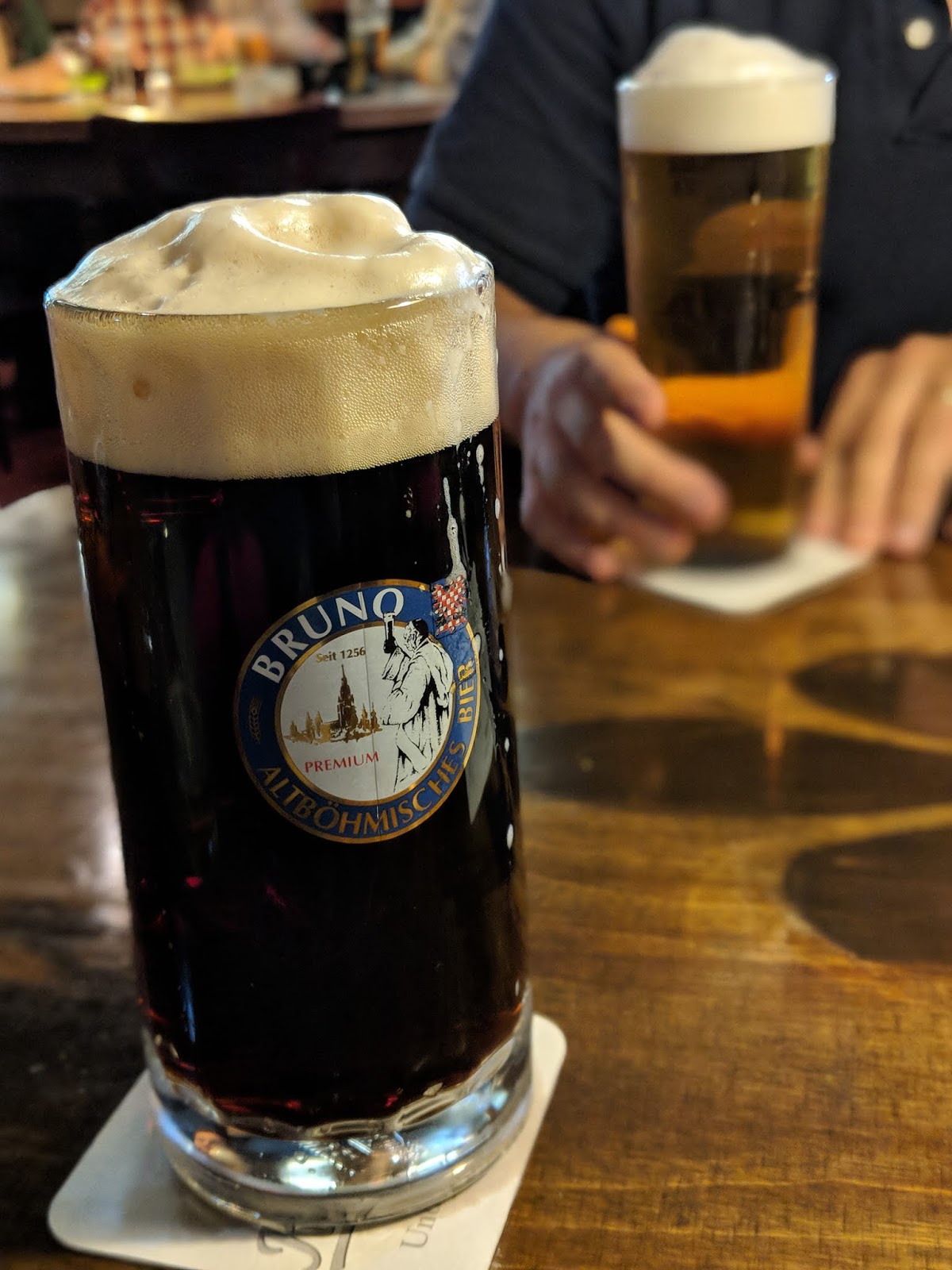 Next I go dark, to one listed on the menu as Bruno Schwarzbier. I've done my homework and already know it to be a tmavý ležák, one of those Czech-brewed dark lagers that tend to be richer and more malty than any German Schwarzbier. At 3.8% strength it is a 10-degree tmavý, which is pretty unusual in Czechia. In Germany it's legally a Schankbier. It tastes bigger: light caramelized sweetness, note of spicy licorice mingling with the roast. A lot of character but, again, very easy to drink. Later, when I think about going back to the Strassenbahn, this is the beer I think about most. That lush foam sticks in my memory too.
For my third and last beer I go with the one that drew my eyes here in the first place: Andechser Spezial Hell. At 5.8% strength this is no ordinary helles; it's a proper festbier. It's harvest time, you know? It pulls off that great Bavarian balancing act of sweet fulsome malt, gentle bitterness, and a finish just dry enough to keep you wanting more. Hey, some people think these beers are boring. I meet them sometimes, like this American working in Munich who says he doesn't like Bavarian beers, he only wants IPA. These people exist. I pity them.
There is another interesting thing about the Strassenbahn: It calls itself a Kneipenkollektiv -- a collectively owned pub. Six friends founded it a few weeks before I was born -- that is, a few weeks before Star Wars premiered. According to the website, they suspect that they are the oldest remaining collective in Berlin. Everybody who works there gets paid the same. Some proceeds go to charity.
No pricey pale ales here, no fruited IPAs, no selection of 100 bottled beers. Just a handful of well-brewed and perfectly poured lagers at fair prices. This is why I scratch my head when I visit Stone and see something like Mahrs U going for €6.50 per half-liter. Because it's robbery, that's why. There is no need to pay that much for a good lager if you're willing to look around town a bit, and visit some local institutions.
* Neighborhood bars, including Eckkneipen -- corner bars. Important Berlin institutions.
** Coziness.
Tuesday, October 2, 2018
Pubs of Berlin: The Strassenbahn.


Thursday, September 28, 2017
Is Berlin Over-saturated with Craft Beer? Only in Parts.
 My educated guess is that Berlin can handle plenty more variety-beer bars... but not if they all keep opening in the same few neighborhoods. Maybe you can spot some of these symptoms in parts of your own cities.
Another cool beer bar seems to open every other week. Is this new bar going to attract new people? Or is it hoping to share the same drinkers with all the other bars?
Faux-Coney-Island-frito-pie-hipster bar the Pier in Mitte shut not long ago (after Brewdog opened nearby, notably), but I can't think of too many others that have closed. More will close, no doubt, but many more will arrive. So my pessimism just is a hunch, based on some anecdotal observations:
1. You go to these new bars and see the same people you saw at the less-new ones. Are they still going to all the other ones?
2. Often they're not very crowded.
3. Many bars try to saturate the calendar with special events, which smells of desperation. Would people not want to go to them otherwise? Why not?
 4. There are finite limits to the number of people who will spend a bit extra on variety beer, how much beer they can drink, and the number of places they can visit in an evening or a week.
5. Most of these bars are concentrated in the same few neighborhoods, all roughly on the eastern side of the Berlin map.
It's that last point that sticks out to me most, because I am a selfish hedonist and I live on the western side of the map. Thing is, so do lots of other people -- people with money who like to drink beer.
Like us. Most of the time we are content with our well-stocked fridge and proximity to Foersters, which for my money and particular taste is the best pub in town. But when we're feeling daffy we hire a kid-sitter and ride an hour-plus on the train each way -- more than two hours of the evening counted already, money in the sitter's pocket -- to get over to Kreuzberg or Friedrichshain or Prenzi.
Hey, nothing like a romantic pub crawl.
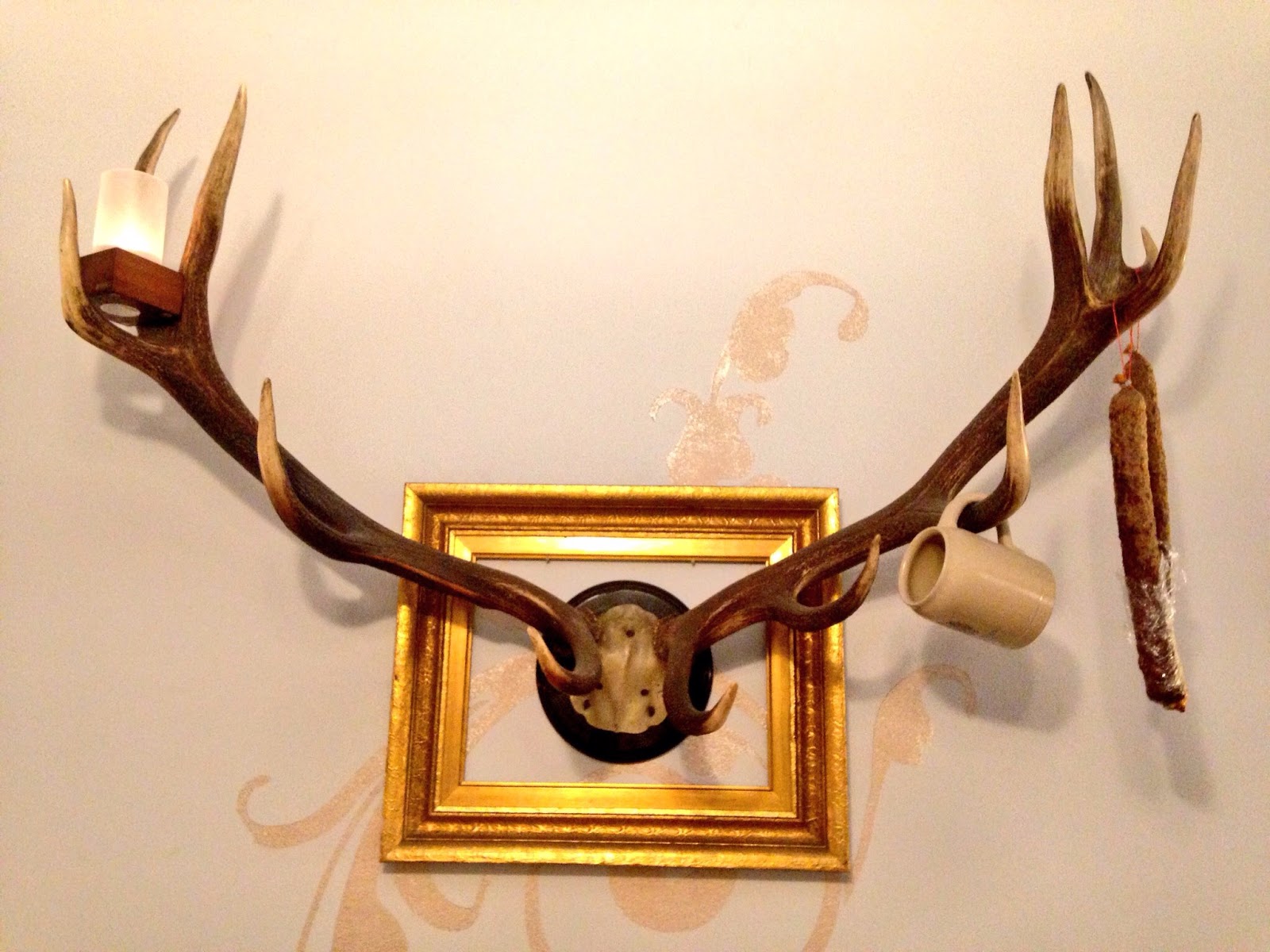
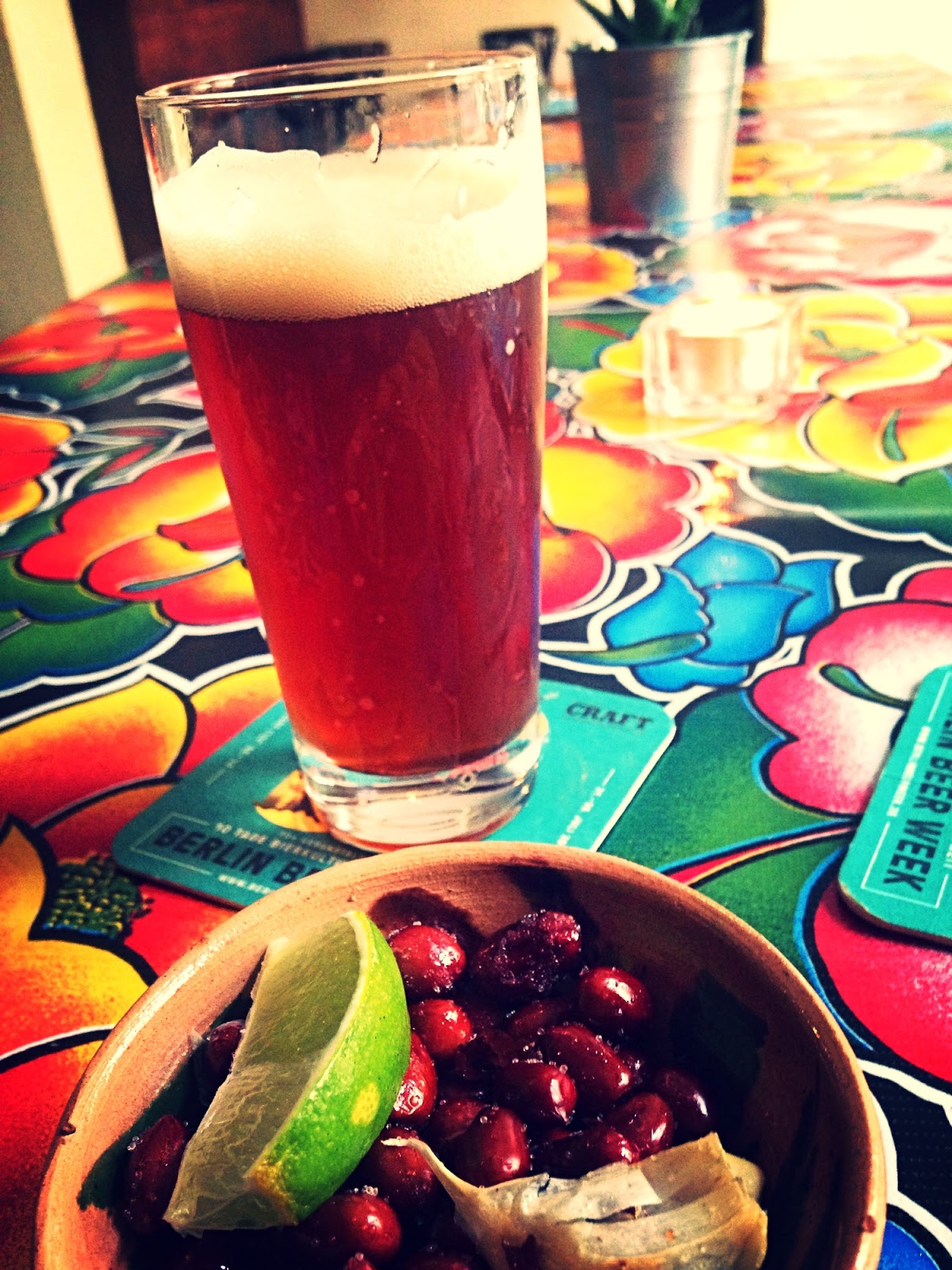
That's what we did weekend before last: Munched on salty-lime peanuts and tasted Mexican-inspired house brews at Tentacion Craft Beer/Mezcalothek -- lovely beers, balanced, well-made, and adequately smacking of the agave (Mala Vida) and corn (Gualicho) that went into them; stopped into cozy, antlered Friedrichs Wirtschaft for a Rittmayer Kellerbier and promised to come back sometime for the food; popped by the Getränkefeinkost shop to say hello and walk round the block with hoppy cold ones (me a Zinnebir, her a Lemke Spree Coast IPA); tried the new bar across the street called Protokoll with 24 taps -- we didn't even know it existed -- where she did a sour-sweet pairing thing with BRLO beers while I enjoyed a Weiherer Keller-Pils; had quickies at Hops & Barley, reliably some of the best beer in Berlin; looked in on Home, rather snug with the upholstery but chasing us away with iffy avant-garde live music; ate some late-night Sudanese, which is a thing, and is characterized chiefly by lakes of peanut sauce, and I am cool with that; and finally to the last spot of the evening, easily my favorite, called Victoria Stadler.
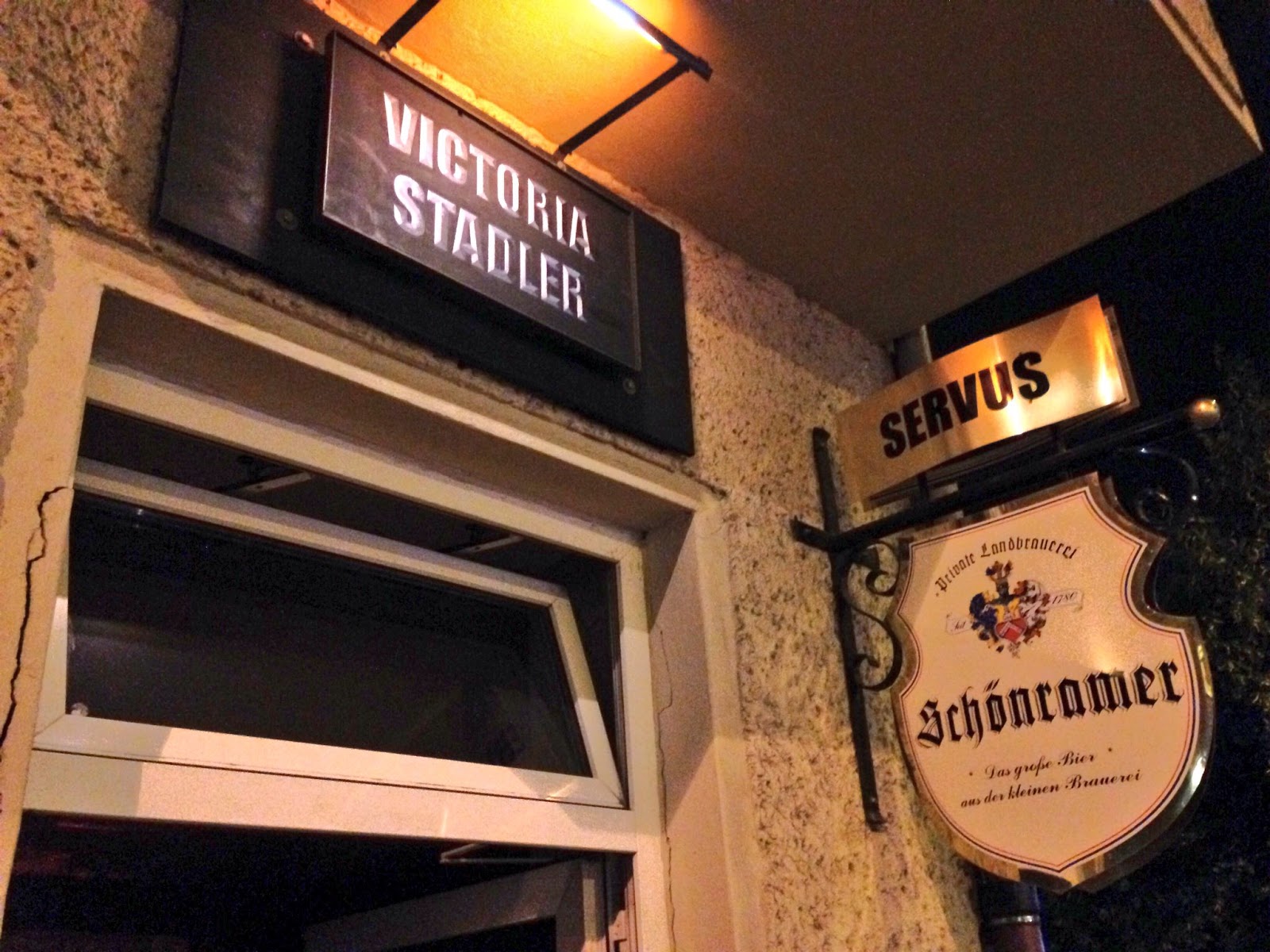
 Sometime maybe I'll go back and scribble notes to craft a wordier post about this one bar, but here is the gist: it's a dark, affordable Eckneipe (locals' corner pub) that only pours Schönramer beers -- the Pils being a special favorite of mine. Now, you may or may not know that Schönram is waaayyyy down in southern Bavaria, near Berchtesgaden and the Austrian border. Its beers show up in Berlin but to find a pub totally devoted to Schönramer here is a strange and wonderful thing to me. (My impression is that Schönramer have something like a cult following soon to get less cult-ish; they just picked up three golds and a bronze at the rather competitive European Beer Star awards.)
Sadly, it's an hour and 15 minutes for me to get to Victoria Stadler by train. And it's there among a thousand other bars. The saturation is good for pub crawling, obviously. But that's not how most people do pubs, most of the time.
 About the western Berlin beer spots: BRLO, Foersters and Vagabund, among others, appear to be doing quite well. Lots of people in those places, and not the same faces you see in the places out east. Upmarket craft-beer-and-sausage restaurant Meisterstück just opened a second restaurant on Ku'damm. That one is well backed, and I reckon they've done their market-research homework.
Berlin is a sprawling city of neighborhoods, you see, and the western ones are far from saturated. There's my counsel, should you be looking to open a Berlin bar specializing in fancy variety beer.
Friday, May 1, 2015
Session #99: What's YOUR Mild?
 I have an hour left in my somewhat arbitrarily self-determined work day before I go an open a bottle of something easy to drink. And I see that today is the day of the Session, the first Friday of the month, when a bunch of beer bloggers tackle the same subject. And then I think, "Oh shit! I still have a blog. Why not?"
Alistair Reece at Fuggled has an agenda with this one. He is promoting mild. That is ostensibly a style of beer. And Al is simultaneously proposing and promoting American Mild Month. Which starts today. This is one of the noblest goals I can think of, and not just because I like the style "mild." To be honest I'm not sure mild represents a style or vice versa. But I love what mild stands for: flavorful yet easy-to-drink. To me it's comfort food in a glass.
I have had a few great British milds and a couple of good American ones. Stuff I would drink again without hesitation. But that was not Al's question. He wants us to localize it.
Localizing is tricky for me.
[Stands up from desk. "HONEY! WHAT COUNTRY ARE WE IN TODAY? GERMANY? OK!" Sits back down to write.]
I grew up in Missouri. The one there that pops into my head is the Bird and Baby from Rolla's Public House -- a brewery largely devoted to session beers -- but all of that came long after I left the state.
But right now I'm in Berlin and will live here for a few more years. The local I have chosen to be mine is called Foersters, and I can walk there in 20 minutes. I happen to think it's the best bar in Berlin, but I'm also biased because a lot of the hip beer joints are across town. So far.
 OK, wait. Let's abstract the mild a bit. Let's suppose my "mild" is the one that's always at my pub of choice, the first thing I order every time I walk in, it's flavorful -- delicious, even -- but unchallenging. It is comforting like a baby's bottle.
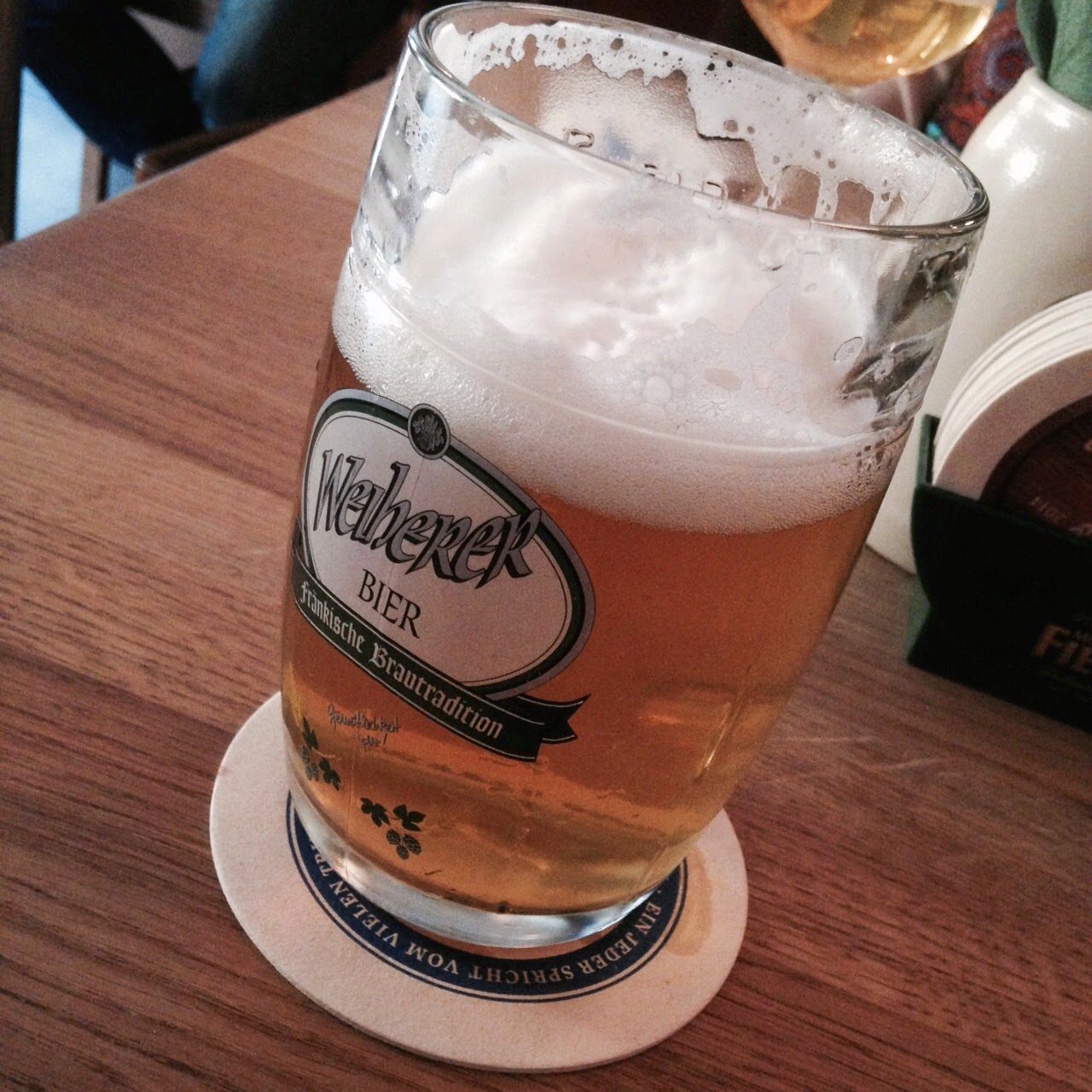
That one for me, at Foersters, is Weiherer Kellerbier. Hazy gold, sweetish, bitterish, with a creamy vanilla impression. Oh there are better kellerbiers out there. In fact there are better kellerbiers at Foersters. But it's the one that's on draught, every time I walk in, and I don't have to use my brain to order it, and sometimes I don't even have to order it -- it just arrives, like a friend who can finish your sentences.
American beer drinkers are getting more and more familiar with the word "session" -- which is great, even if it's always attached to "IPA." Time to take the concept further. Mild could do it, why not? At the very least it could be a much needed calming influence.
But if not mild, explicitly, I'd be more than content to settle for what mild represents. I usually am.

 Posts
Posts


